
Last updated November 2, 2026
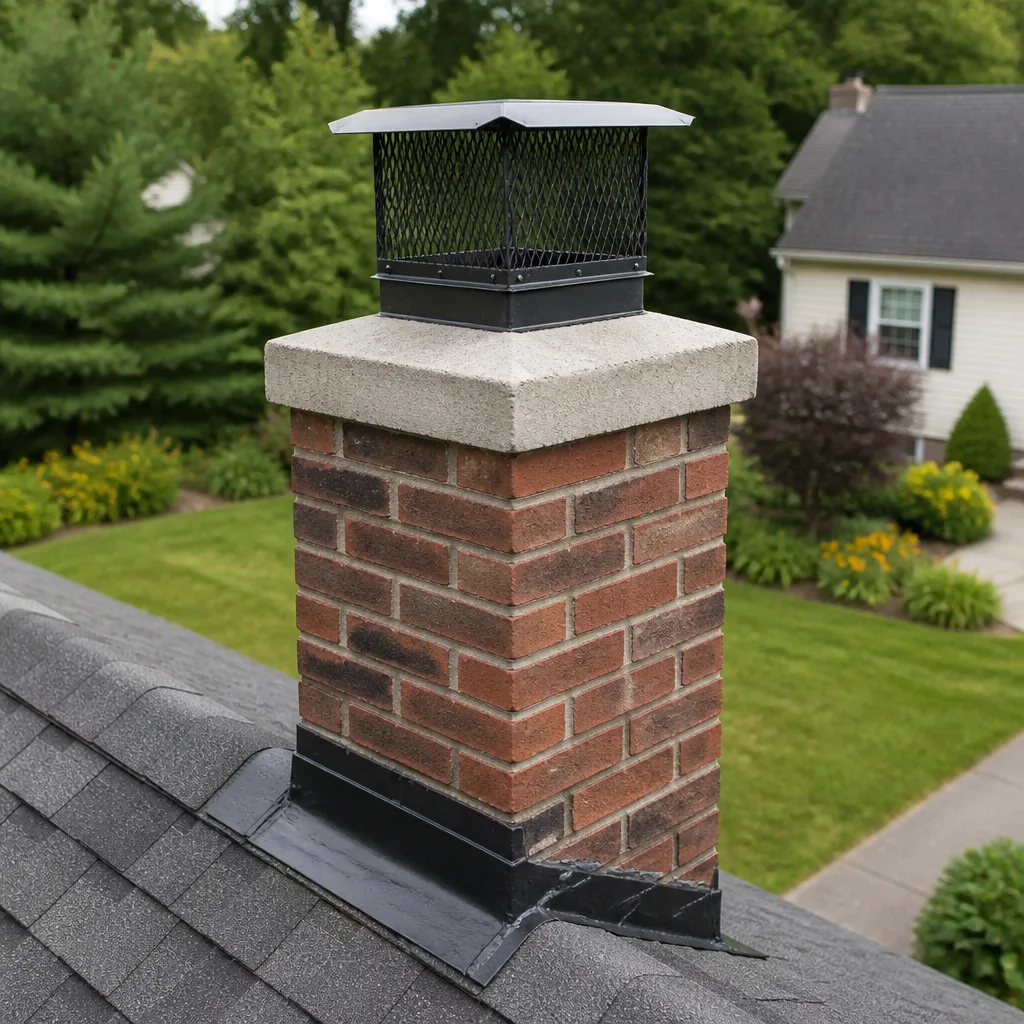 Sweep & inspection
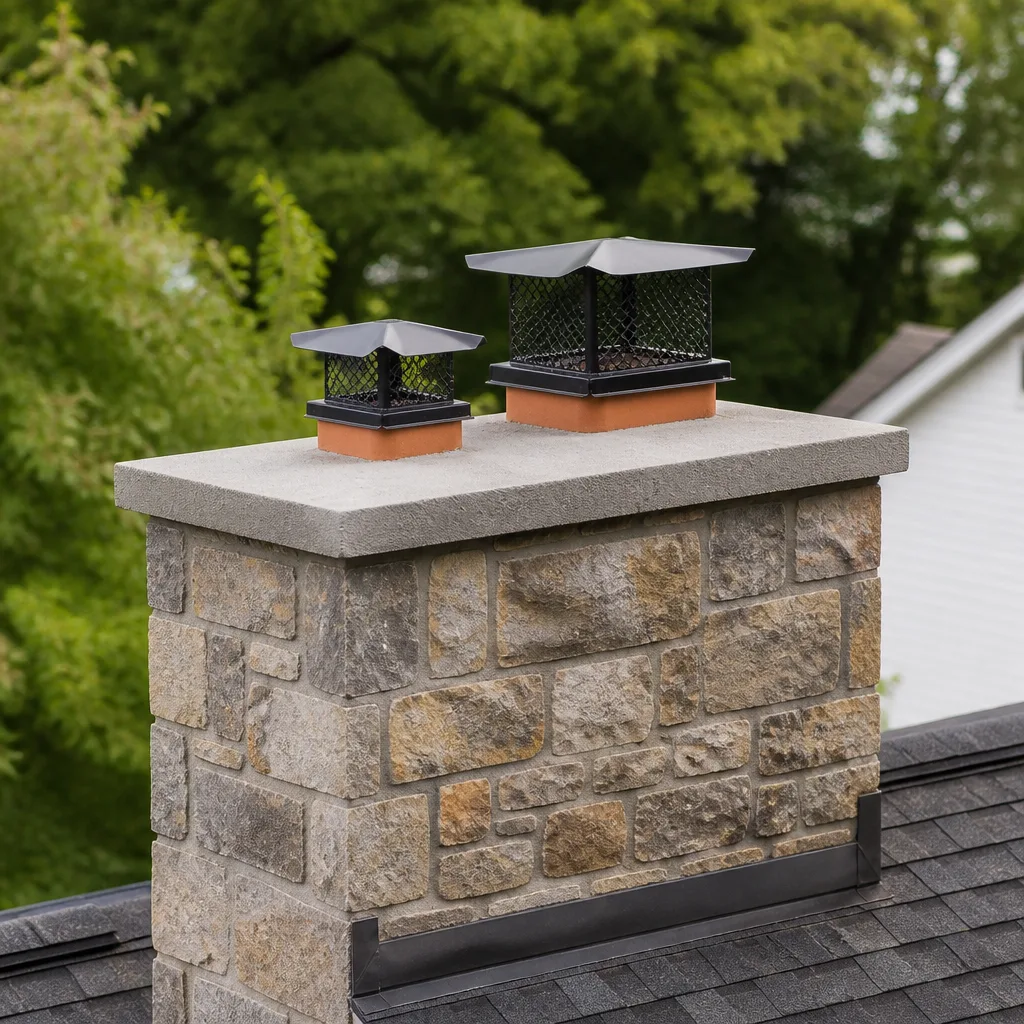 Caps & crowns
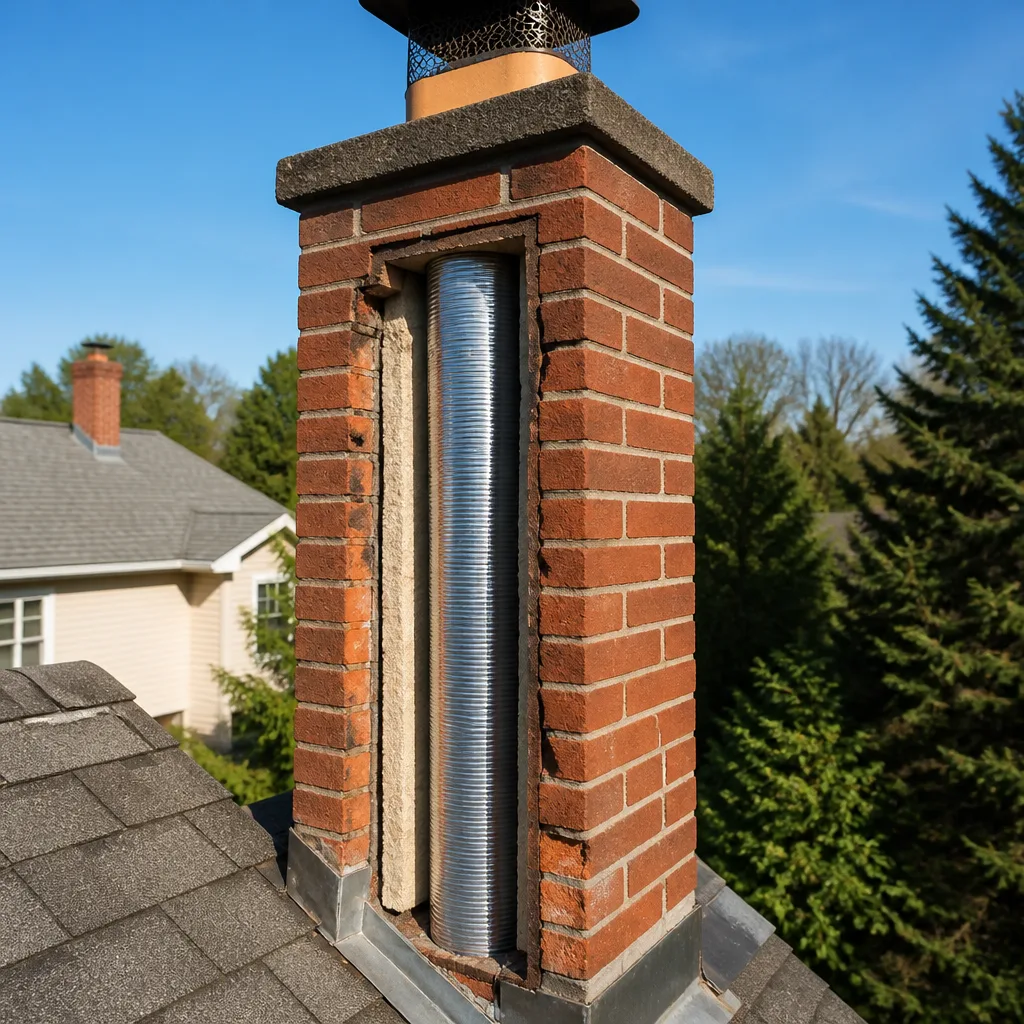 Flue relining
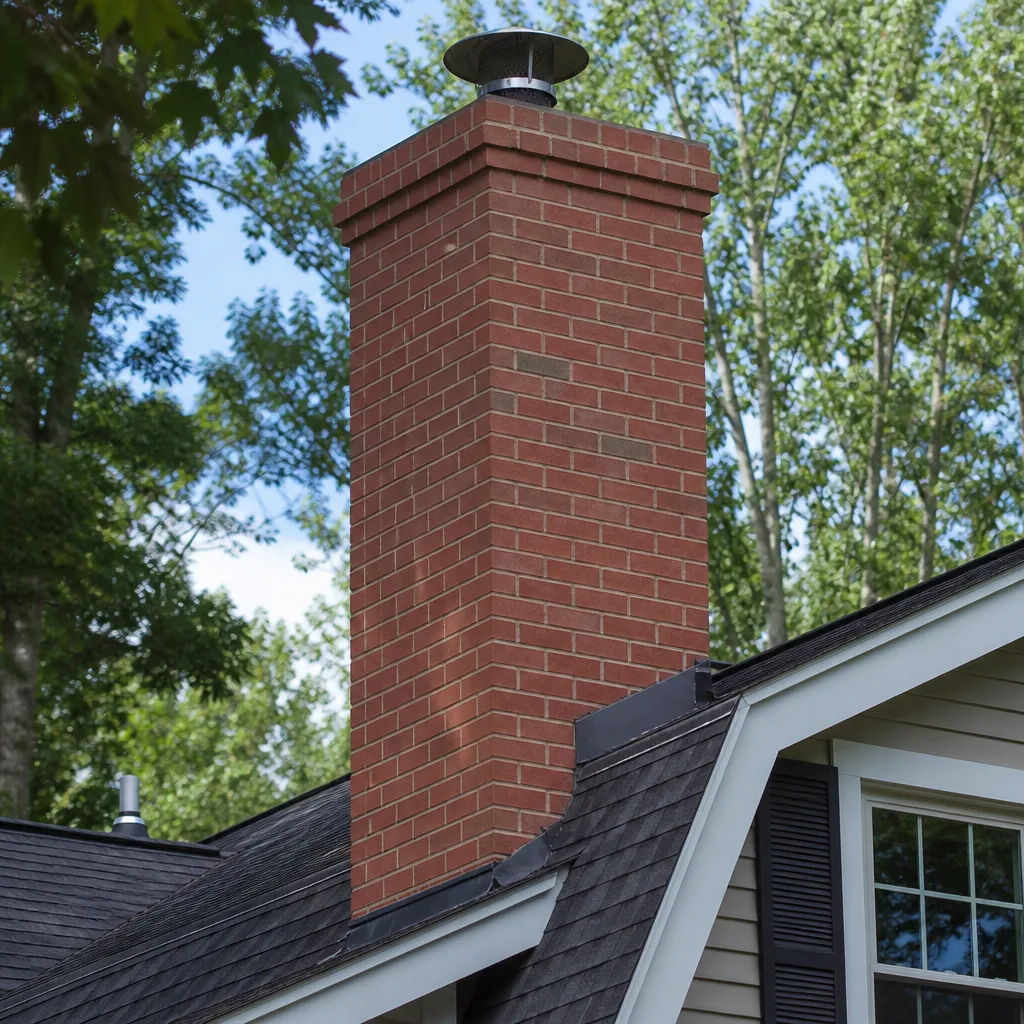 Masonry repair
 Gas fireplace service
Level 1 sweep and inspection to the NFPA 211 annual standard - flue, crown, cap, and flashing checked and photographed
Chimney sweep logs do not sweep chimneys. They loosen some creosote - which then falls where a brush and vacuum still have to collect it.
Chimney Cleaning Warning Signs: A Northridge Homeowner’s Reference Guide
Most chimney warning-sign guides read like a grocery list of symptoms with no explanation of what’s actually happening inside your flue. That’s a problem, because a homeowner who sees a faint white stain or hears a subtle popping sound will logically assume it’s normal aging and move on. This guide is different. We’ll pair each visible, audible, and olfactory warning sign with the physical failure mechanism causing it, so you can look at your own chimney and understand what the house is trying to tell you. By the time you finish reading, you’ll know which signs are cosmetic, which ones mean schedule a sweep, and which ones mean stop using the fireplace in Northridge tonight.
Quick Answer
The clearest warning signs that your chimney needs cleaning or inspection in Northridge are: a persistent campfire-like odor when the fireplace isn’t in use, white staining (efflorescence) on the exterior brick, flaking or spalling masonry, visible soot or creosote buildup thicker than 1/8 inch, and downdraft issues where smoke enters the room instead of rising. Any one of these warrants a professional look. Several of them together suggest a liner or moisture problem that needs attention before the next burn season.
Styles & brands we work with
- Sweep & inspection
- Caps & crowns
- Flue relining
- Masonry repair
- Gas fireplace service
Table of Contents
- Efflorescence: The White Stain That Isn’t Cosmetic
- Creosote Buildup: What It Looks Like and Why It’s Dangerous
- What Your Chimney Sounds Like When Something’s Wrong
- Persistent Odor vs. Normal Post-Cleaning Smell
- Drafting Problems: Smoke Where It Shouldn’t Be
- Northridge-Specific Warning Signs
- The Triage Framework: Monitor, Schedule, or Stop
- Common Mistakes to Avoid
Efflorescence: The White Stain That Isn’t Cosmetic
A white, chalky stain on your chimney exterior is efflorescence, and it’s not something you can just scrub off and forget about. Efflorescence forms when water moves through masonry, dissolves natural salts inside the brick and mortar, and carries them to the surface. The water evaporates, and the salt stays behind as that crusty white deposit. What makes this important is that the water had to come from somewhere, and in a functioning chimney, water should never be saturating the masonry from the inside out.
In our work across Northridge, we most often trace efflorescence to three sources: a cracked chimney crown letting rain seep into the brick, a deteriorated flue liner allowing condensation to escape into the surrounding masonry, or flashing failure at the roofline. The stain itself is the last visible step of a process that started higher up. If you see efflorescence near the top of the chimney, look at the crown. If it appears lower, near the roofline, suspect the flashing. If it’s widespread and patchy, the liner itself may be the issue.
Here’s the practical takeaway: efflorescence that appears for the first time, recurs after cleaning, or is accompanied by flaking brick means active water intrusion. You don’t necessarily need to stop using the fireplace immediately, but you should schedule an inspection. The water that’s moving through your masonry is also degrading the mortar joints, and here in the San Fernando Valley, where summer heat cycles alternate with winter rain, wet brick expands and contracts in ways that accelerate cracking. What starts as a cosmetic annoyance becomes structural within a couple of seasons.
When we inspect a chimney with efflorescence, we don’t just note the stain. We run a camera up the flue to trace the moisture source to its origin. Sometimes it’s a simple crown reseal. Sometimes it’s a liner repair. Either way, the fix is addressing what’s happening above the stain, not painting over the stain itself.
Creosote Buildup: What It Looks Like and Why It’s Dangerous
Creosote is the black or dark brown residue that condenses on your flue walls when wood smoke cools too quickly on its way up. The reason it matters isn’t just that it’s dirty. Creosote is flammable, and when it builds to a thickness of 1/8 inch or more, a hot fire can ignite it. Once creosote catches, it burns with intensity that chimney liners and surrounding framing are not designed to withstand. That’s the chimney fire every Northridge homeowner wants to avoid.
Creosote comes in three stages, and they look different:
- Stage one: A fine, flaky black dust that brushes off easily. This is normal after several fires and is what a routine sweep removes.
- Stage two: A shiny, hardened black glaze that requires mechanical scraping. At this point, you’re burning too-cool fires or using wood that hasn’t been properly seasoned.
- Stage three: A thick, tar-like layer that looks like hardened syrup or candle wax. Stage-three creosote is a fire waiting to happen and often requires chemical treatment or professional removal beyond standard sweeping.
You can check for early creosote without climbing onto the roof. Put on a work glove and reach up past the damper with a small mirror and flashlight. If you see black buildup thicker than the width of a nickel, you’re due for a sweep. If you can’t reach it or don’t want to get sooty, that’s exactly why professional sweeps exist. We’ve also seen homeowners misjudge their own inspections, convincing themselves that what they’re seeing is just “normal smoke staining.” It isn’t. Staining is grayish and thin. Creosote is thick, textured, and forms in layers.
Northridge’s dry climate has a surprising effect on creosote. Because the air lacks humidity, creosote can dry into a brittle state that flakes off during the next fire. That sounds good, but it means those flakes are now loose inside the flue, where they can ignite easily or accumulate at the smoke shelf and create a secondary blockage. We regularly see this pattern in homes that burn oak and almond, both common woods out here. If you’re burning fruitwood or hardwoods that leave heavy residue, annual sweeping is the minimum.
What Your Chimney Sounds Like When Something’s Wrong
Most homeowners don’t think of a chimney as something that makes noise. But when a fireplace is in use, or even when the wind blows across the roof, your chimney can tell you exactly what’s wrong with it. You just have to know what you’re listening for.
Popping or crackling during a fire
Popping and crackling from the firebox is usually wood moisture, but popping sounds coming from above the firebox, up inside the flue, are a different story. That sound is often creosote expanding and contracting as it heats. Flakes of creosote can break loose and fall, and in severe cases, the popping is the sound of creosote igniting in small pockets. If you hear popping that seems to echo up the chimney rather than crackling in the fire itself, stop using the fireplace and have the flue inspected. We’ve had Northridge homeowners describe exactly this, and when we run the camera, we find stage-two or stage-three creosote every time.
Hissing or a low rumble
A hissing sound during a fire can indicate that moisture is being driven out of the masonry or that air is being pulled through a small gap in the damper or liner. A low, continuous rumble is more serious: it can be the sound of a chimney fire actively burning in the flue. If you hear a rumble that doesn’t sound like normal fire noise, especially if the fireplace starts drawing much harder than usual, close the damper if you can do so safely and call the fire department. Do not try to extinguish a chimney fire with water. The thermal shock can crack the liner and spread the fire.
Wind whistling or howling when the fireplace isn’t in use
A whistling sound when the wind blows across the chimney usually indicates a problem with the cap or the crown. In Northridge, where Santa Ana winds can throw debris across the Valley at 40 to 50 miles per hour, we see caps dented, knocked askew, or entirely missing. A chimney without a proper cap lets wind enter the flue and create turbulence that whistles through the damper. The fix is straightforward: a properly sized cap from a manufacturer like Copperfield or Famco, installed and sealed. But the warning sign matters because an uncapped chimney is also open to rain, birds, and embers.
Persistent Odor vs. Normal Post-Cleaning Smell
After a professional chimney sweep, you might notice a faint sooty smell for a day or two. That’s normal. It’s the odor of dislodged creosote particles settling in the firebox and smoke chamber, and it usually dissipates as those particles settle and the chimney airs out. What’s not normal is a persistent campfire or charcoal smell that lingers for weeks, returns every time the weather changes, or appears during the summer when the fireplace hasn’t been used in months.
A persistent smoke odor in an unused fireplace is almost always a sign of one of two things. The first is a negative-pressure problem in the house itself: exhaust fans, central vacuums, or tight weather sealing pull air down the chimney instead of letting it rise. The second, and more concerning, is a leak in the flue liner or the chimney structure that’s allowing creosote-saturated air to seep into the house. We distinguish the two by smell quality. Negative-pressure downdrafts smell like cold smoke. A liner breach smells like hot, acrid soot, and it often gets worse on humid days or when the house is closed up.
The distinction matters because the fixes are completely different. A negative-pressure issue might be addressed with a damper adjustment or a make-up air vent. A liner breach is a structural problem that needs repair. In houses built before the 1990s, we often find clay tile liners that have cracked from decades of thermal cycling. Those cracks are small enough to go unnoticed until the smell gives them away. If you smell smoke and you haven’t burned anything in weeks, don’t wait. The same pathway that lets smoky air into your house can let carbon monoxide in during a fire.
Drafting Problems: Smoke Where It Shouldn’t Be
A properly functioning chimney should draw smoke upward and out of the house so reliably that you never think about it. When smoke starts entering the living room, the chimney is telling you something specific. Drafting isn’t a mysterious force. It’s a physics problem: hot gases rise, and a well-designed chimney uses that rising force to pull fresh air into the fire. When that pull fails, smoke follows the path of least resistance, which is straight into your house.
The most common causes of downdraft in Northridge homes, in order of frequency, are:
- Blockage in the flue: Creosote buildup, a bird’s nest, or a fallen flue tile section restricts airflow and breaks the draft.
- Competing exhaust: A kitchen exhaust hood, a whole-house fan, or a bathroom fan running at full speed creates negative pressure strong enough to pull air down the chimney.
- Temperature inversion: On cool mornings, heavy outside air sits in the flue and won’t rise until the flue is primed with heat. Northridge’s wide day-night temperature swings make this more common than homeowners expect.
- Improper flue sizing: A chimney built for a wood stove connected to an open fireplace, or vice versa, won’t draw properly no matter what you do.
- Structural damage: A collapsed liner section or a separated flue tile disrupts airflow and often forces smoke out through the gap instead of the top of the chimney.
You can test drafting before you commit to a full fire. Roll a sheet of newspaper into a torch, light it, and hold it up near the open damper. If the smoke rises toward the flue, you’re probably fine. If it mushrooms into the room, stop and investigate. Intermittent smoke issues that only happen on certain days usually point to pressure or temperature problems. Consistent smoke problems point to blockage or structural issues. Either way, the fix starts with an inspection, not a bigger fire.
Northridge-Specific Warning Signs
Every region has its own chimney failure patterns, and Northridge has three that don’t show up in generic homeowner checklists. These are the things we see repeatedly on service calls across the 91324 and 91325 zip codes, and they deserve attention precisely because they’re local.
Earthquake micro-cracking
Northridge sits near the Northridge Fault, and even small seismic events create hairline cracks in masonry that wouldn’t appear in less seismically active areas. These cracks are thin, often running horizontally along mortar joints or vertically through brick. Individually, they look cosmetic. But over time, they create pathways for moisture, and in the case of the flue liner, they can develop into dangerous heat-transfer points. After any earthquake, even a mild one, it’s worth checking the chimney exterior for new cracks. We’ve followed up after modest tremors and found hairline damage that the homeowner hadn’t noticed because they were looking for something dramatic. Chimney damage after seismic events is rarely dramatic on day one. It’s subtle and it worsens.
Stucco-to-brick transition failures
A lot of Northridge homes are stucco-clad, with brick chimneys rising above the roofline. The joint where the stucco meets the chimney brick is a classic failure point. Stucco and brick expand at different rates in our heat, and the sealant between them eventually separates. Once that gap opens, rain runs down the brick and into the wall cavity. Inside the house, you might not notice anything. The water stains, rots framing, and finds its way to the ceiling below. We recommend checking this transition joint every year. A separated sealant line is an easy fix if caught early and an expensive repair if ignored through a wet winter.
Cap damage from high-wind debris
Santa Ana winds in the fall routinely exceed 40 miles per hour in the Valley, and the debris they carry doesn’t need to be large to do damage. We’ve removed tree branches, palm fronds, and roofing fragments from chimney caps across Northridge. A dented or shifted cap often looks fine from the ground, but it can block airflow, let water in, or create the whistling sound covered earlier. If you’ve had a windy week and suddenly notice a new draft, smell, or sound from the fireplace, start with a visual check of the cap. Look for dents, displacement, or missing screen mesh. A replacement cap from a brand like Copperfield or Famco is a small investment compared to the water damage an uncapped flue lets in.
The Triage Framework: Monitor, Schedule, or Stop
Not every warning sign demands immediate action. Some things can be monitored through a season. Some need attention within a month. A few mean stop using the fireplace until a professional has looked at it. Here’s the framework we use when homeowners call and describe what they’re seeing.
Monitor and schedule when convenient
- Light gray soot staining on the firebox walls
- A faint smoky smell that appears for a day or two after a fire
- Minor efflorescence that hasn’t reappeared after cleaning
- A cap that is slightly dented but still fully functional
- Occasional downdraft on windy days with no smoke entering the room
These signs suggest the chimney is functioning but could use attention before the next heavy burn season. Book a sweep or inspection when your schedule allows, ideally before November, when chimney service in Northridge gets busy.
Schedule within 30 days
- Efflorescence that reappears after cleaning or spreads over a season
- Creosote buildup you can see with a flashlight and mirror
- Popping sounds coming from above the firebox during fires
- A persistent smoke odor that lingers for more than a week
- Cracks in the chimney crown or missing mortar joints at the top
These are active degradation signs. The chimney isn’t about to fail catastrophically, but the conditions are worsening. A month is a reasonable window. Waiting longer lets water intrusion continue through the winter rains, and by spring, the repair scope will almost certainly be larger than it would have been.
Stop using the fireplace now
- Smoke entering the room during a fire, even occasionally
- A low rumbling sound from the flue during a fire
- The smell of hot, acrid soot in the house when no fire has burned for weeks
- Visible flames or glowing material in the flue above the damper
- A chimney fire, even one that burned itself out without visible damage
These are not negotiation points. Any one of them means the fireplace should go cold until a professional inspection. If you’re in Northridge and hit one of these, call us at (833) 589-9223. We’ll get it camera-inspected and explain exactly what’s happening before any work is recommended. You’ll see the evidence yourself, not just hear about it from someone telling you to spend money.
Common Mistakes to Avoid
- Scrubbing off efflorescence without finding the water source: The stain comes back because the moisture path is still active. Fix the crown, the flashing, or the liner first, then clean the brick.
- Burning “creosote-cleaning” logs as a substitute for sweeping: These products can loosen creosote but they don’t remove it. The loosened material falls into the smoke shelf and can create a new blockage. We’ve removed more of that loose, flaky material after cleaning-log use than from any natural cause.
- Waiting until fall to inspect a fireplace used all winter: By October, every sweep in Northridge is booked out. Inspect in spring or summer when you can schedule on your timeline and address issues before burn season.
- Assuming a gas fireplace doesn’t need chimney care: Gas inserts still vent combustion gases, and they still develop creosote-like residue if the burner isn’t adjusted correctly. They also accumulate bird nests and debris in the flue just like wood-burning chimneys.
- Ignoring the dryer vent because “the chimney is the priority”: We get this a lot. A clogged dryer vent is one of the leading causes of residential structure fires nationwide, and it operates under the same principle as a flue: remove hot, lint-laden air before it accumulates. Dryer vent cleaning in Northridge deserves the same annual schedule as chimney sweeping.
- Sealing a drafty damper without checking the flue first: A cold draft from the fireplace can mean the damper is failing, but it can also mean the flue is damaged and letting air move through a gap. Sealing the damper only addresses the symptom.
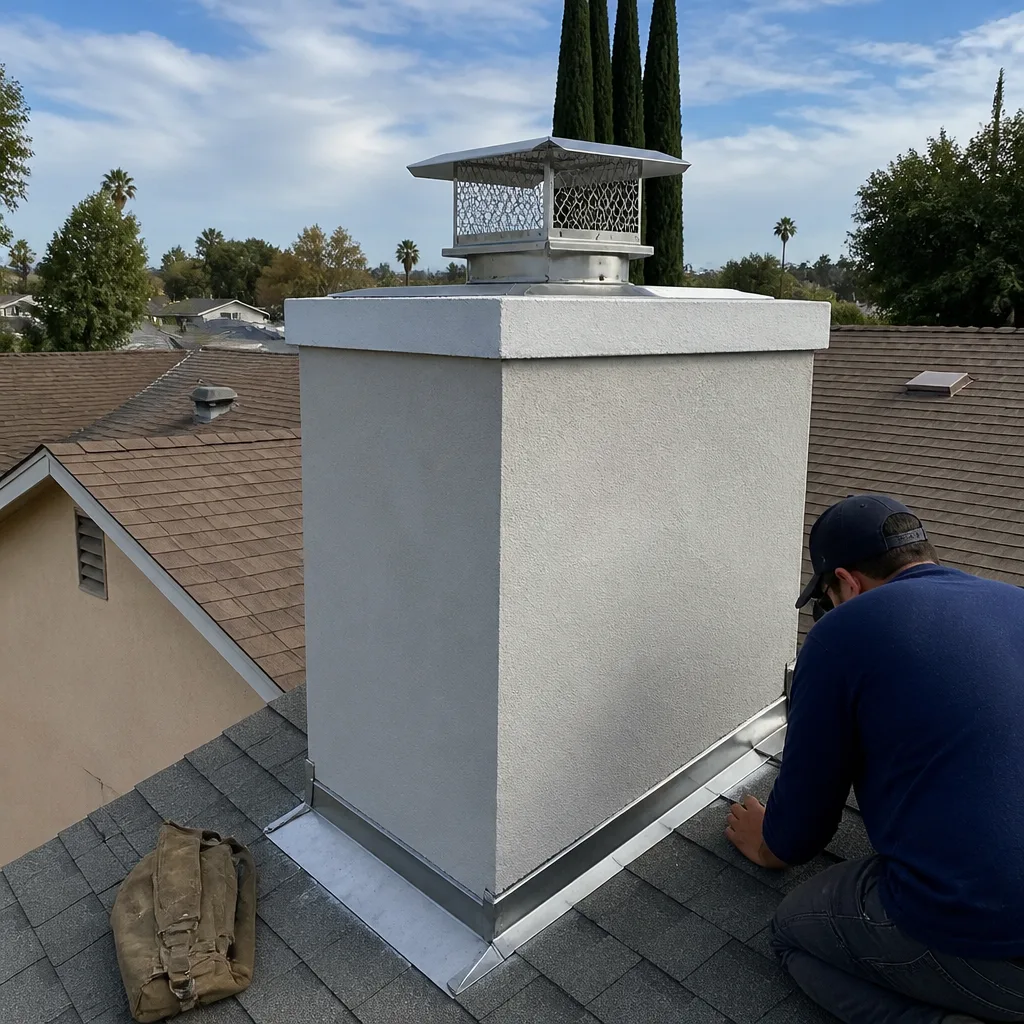
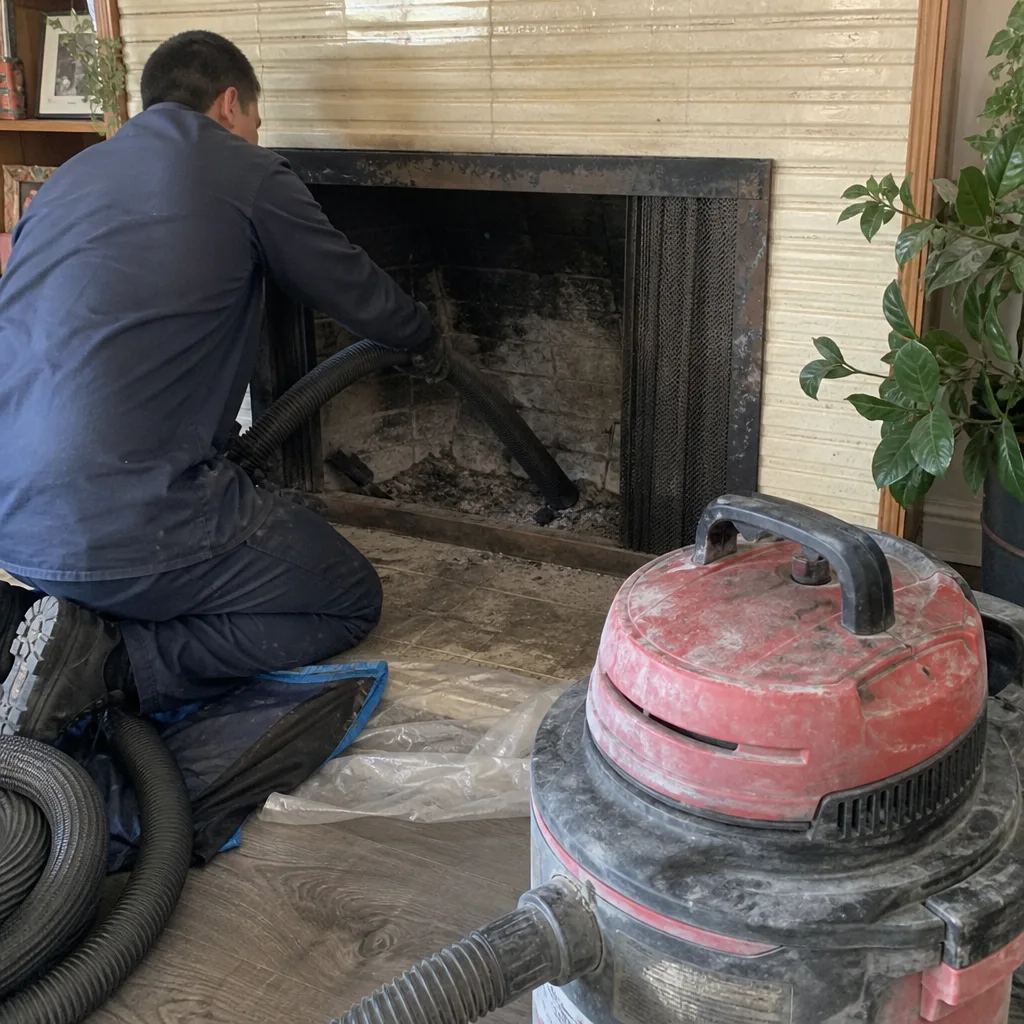
See the difference
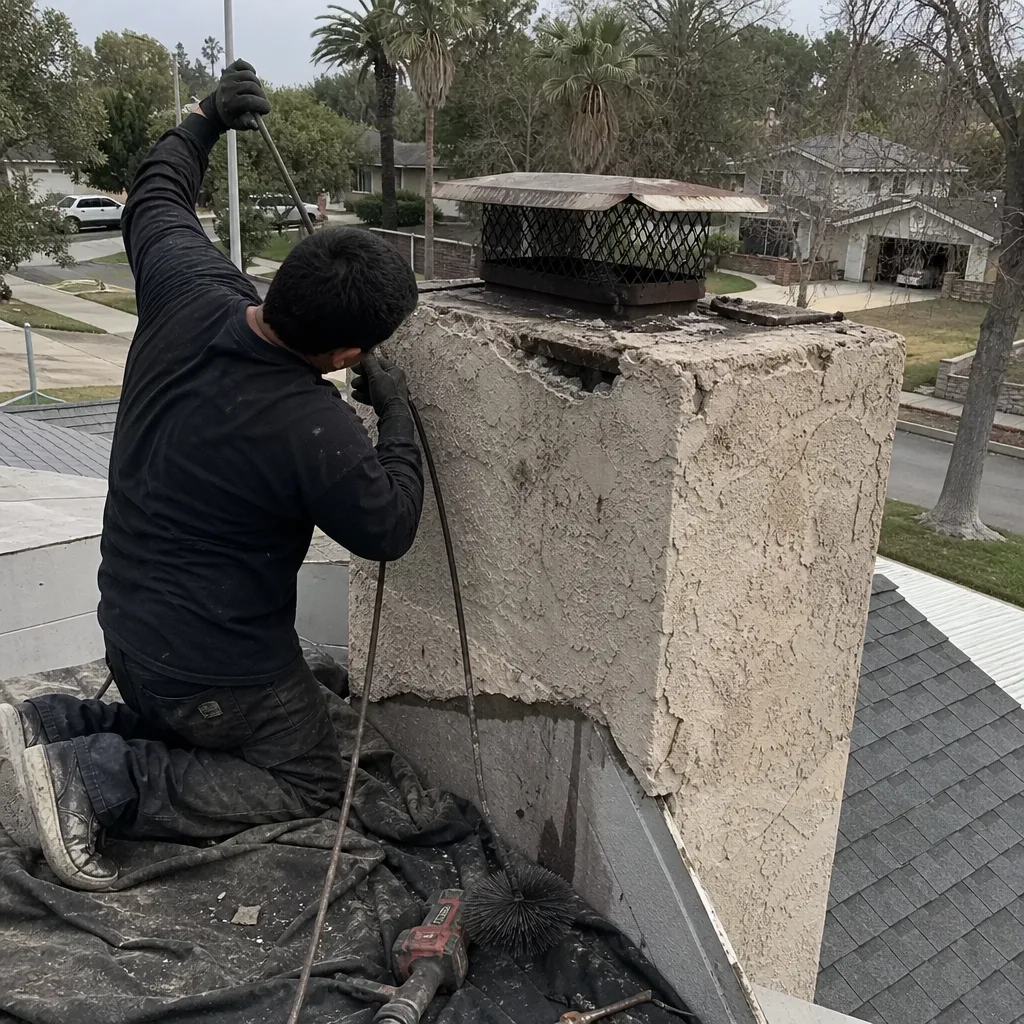 Before
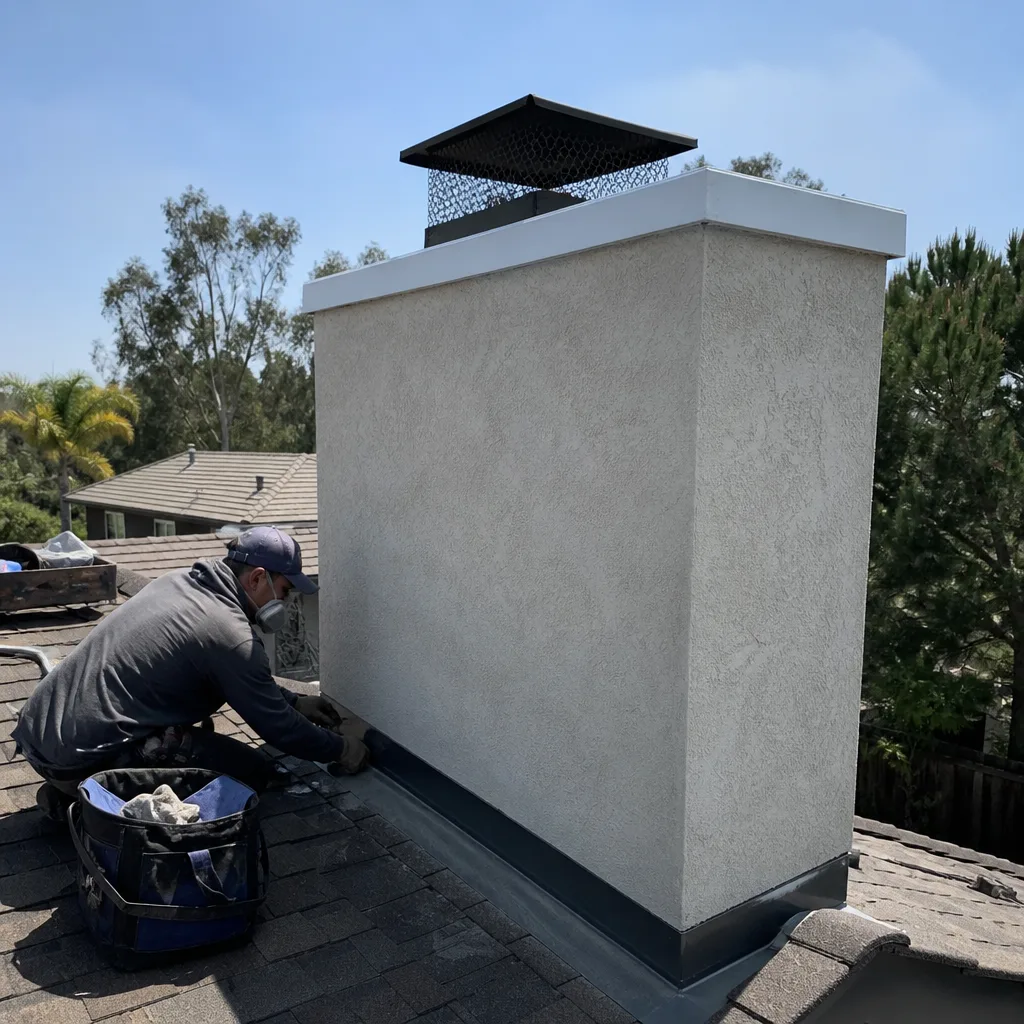 After
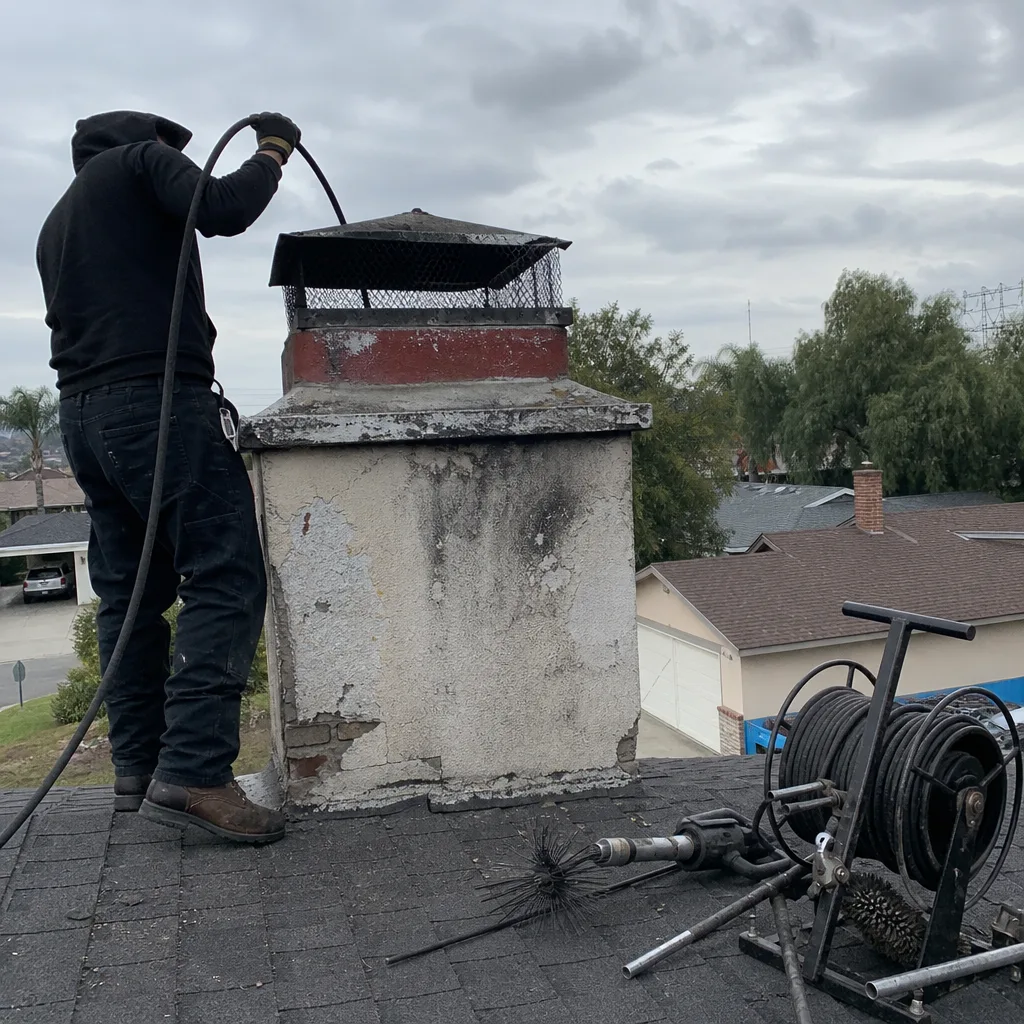 Before
 After
 Before
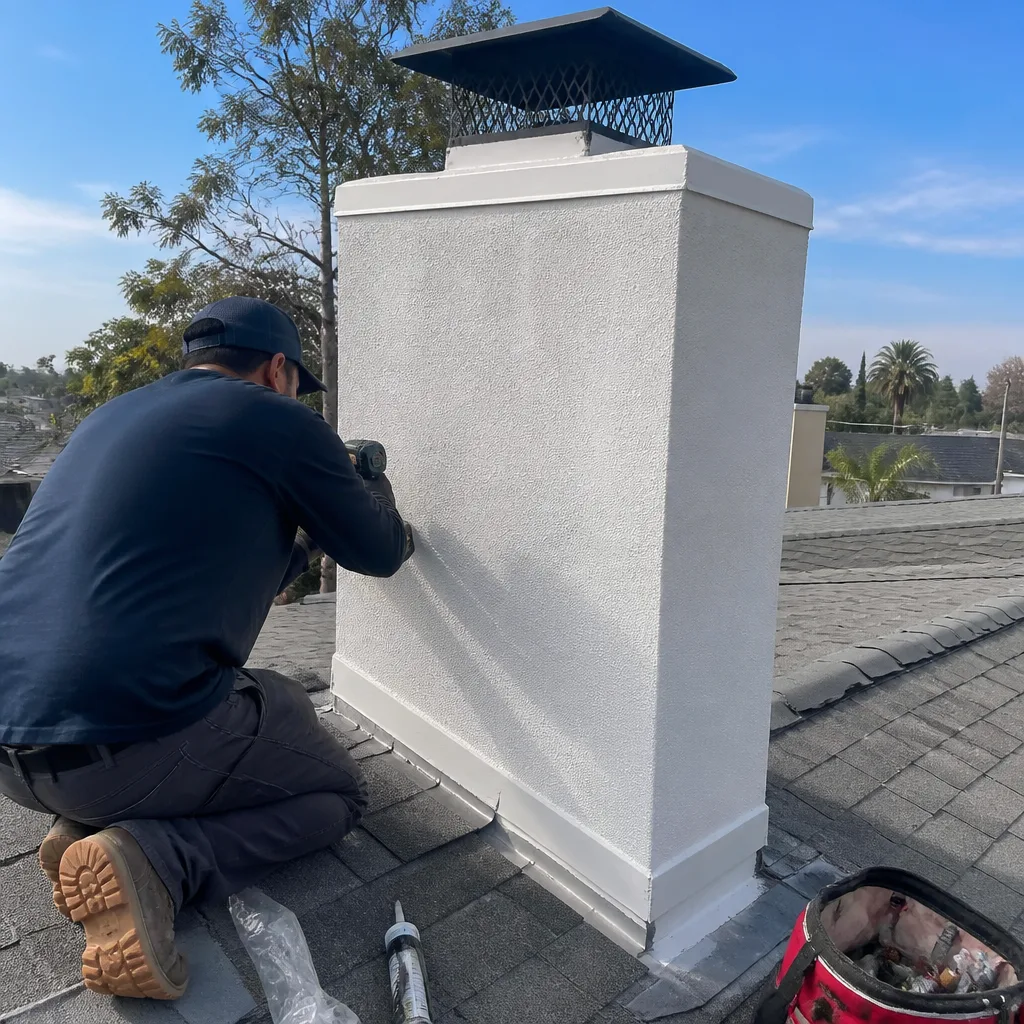 After
When to Call a Professional
If you’ve identified any of the warning signs covered in this guide, the next step is a professional inspection. A chimney sweep in Northridge should include a camera inspection, and you should be shown the footage and have it explained to you. That’s standard practice at Chimney Sweep Northridge, where we inspect, show you the images, and only then discuss repair options. When the issue involves a compromised liner, our chimney repair in Northridge service covers everything from HeatShield resurfacing to full relining with DuraFlex systems. For routine maintenance and annual sweeps, see our chimney sweep in Northridge page. Chimney Sweep Northridge offers free estimates in Northridge. Call (833) 589-9223 to schedule.
Frequently Asked Questions
A standard chimney sweep and inspection in Northridge typically runs between $180 and $320 depending on the chimney’s condition, height, and accessibility. If the flue hasn’t been cleaned in years or has heavy creosote, the price increases because the work takes longer. Call (833) 589-9223 for an exact quote. Estimates are free, and you’ll know the price before any work begins.
A wood-burning fireplace used regularly through fall and winter should be swept at least once a year. If you burn oak, almond, or other dense hardwoods, or if you use the fireplace as a primary heat source, twice a year is safer. Gas fireplaces should be inspected annually as well. The National Fire Protection Association recommends annual inspection regardless of fuel type, and we follow that standard in our own Northridge service area.
Not every compromised liner requires full replacement. HeatShield is a factory-certified resurfacing system that restores deteriorated flue liners by applying a ceramic coating to the existing surface. When the original clay tiles are cracked but the surrounding structure is sound, HeatShield can often repair the liner at a fraction of the cost and disruption of full relining. The only way to know which path applies to your chimney is a camera inspection. We’ll show you the footage and explain the options before recommending anything.
Creosote accumulates, and once it passes 1/8 inch in thickness, it becomes a chimney fire hazard. At the same time, a blocked or narrowed flue doesn’t vent properly, which can push carbon monoxide into the house. Moisture intrusion also worsens with neglect, because the same inspection that catches creosote also catches crown cracks and flashing leaks before they require major repairs. The $250 sweep you skip in year one can become a $4,000 liner replacement in year three.
You can remove loose soot from the firebox with a shop vacuum and a stiff brush, but the flue itself requires tools, access, and training that most homeowners don’t have. More importantly, sweeping isn’t just about removing residue. It’s about inspecting the liner, the crown, the cap, and the flashing while you’re up there. A camera inspection catches problems that aren’t visible from the roof. For the safety risk and the missed diagnosis potential, professional chimney sweeping in Northridge is the smarter choice.
Yes, and it’s the most overlooked fire hazard in the average Northridge home. A clogged dryer vent restricts airflow, causes the dryer to overheat, and creates the conditions for lint ignition. That’s why we offer dryer vent cleaning in Northridge as a standalone service alongside chimney work. The principle is the same: exhaust air and flammable residue need a clear path out of the house.
The Bottom Line
Your chimney communicates through visible stains, specific sounds, persistent odors, and drafting failures. Each warning sign maps to a root cause, and understanding that cause tells you whether to monitor, schedule, or stop burning. Efflorescence means water is moving where it shouldn’t. Creosote thicker than a nickel is a fire waiting for a spark. Popping from the flue, rumbling, and smoke in the room are immediate stop signals. In Northridge, seismic micro-cracking, stucco transitions, and wind-damaged caps add local failure modes worth checking. When you’re ready for an inspection, call Chimney Sweep Northridge at (833) 589-9223. We’ll camera the flue, show you the evidence, and explain what matters before any work is done.
Written by the team at Chimney Sweep Northridge, serving Northridge since 2012.