
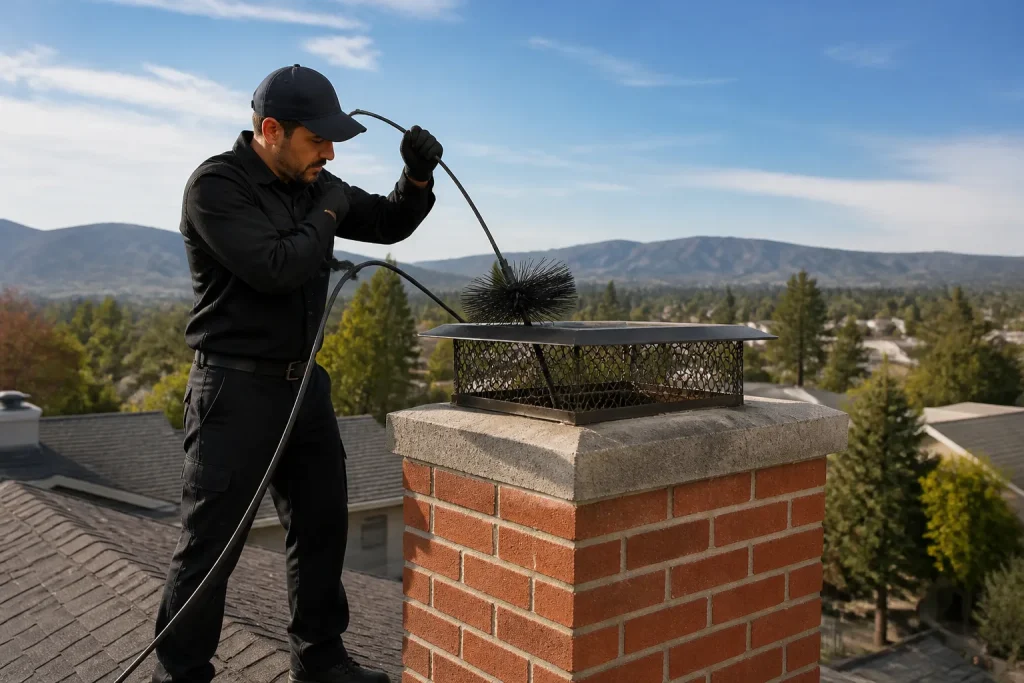
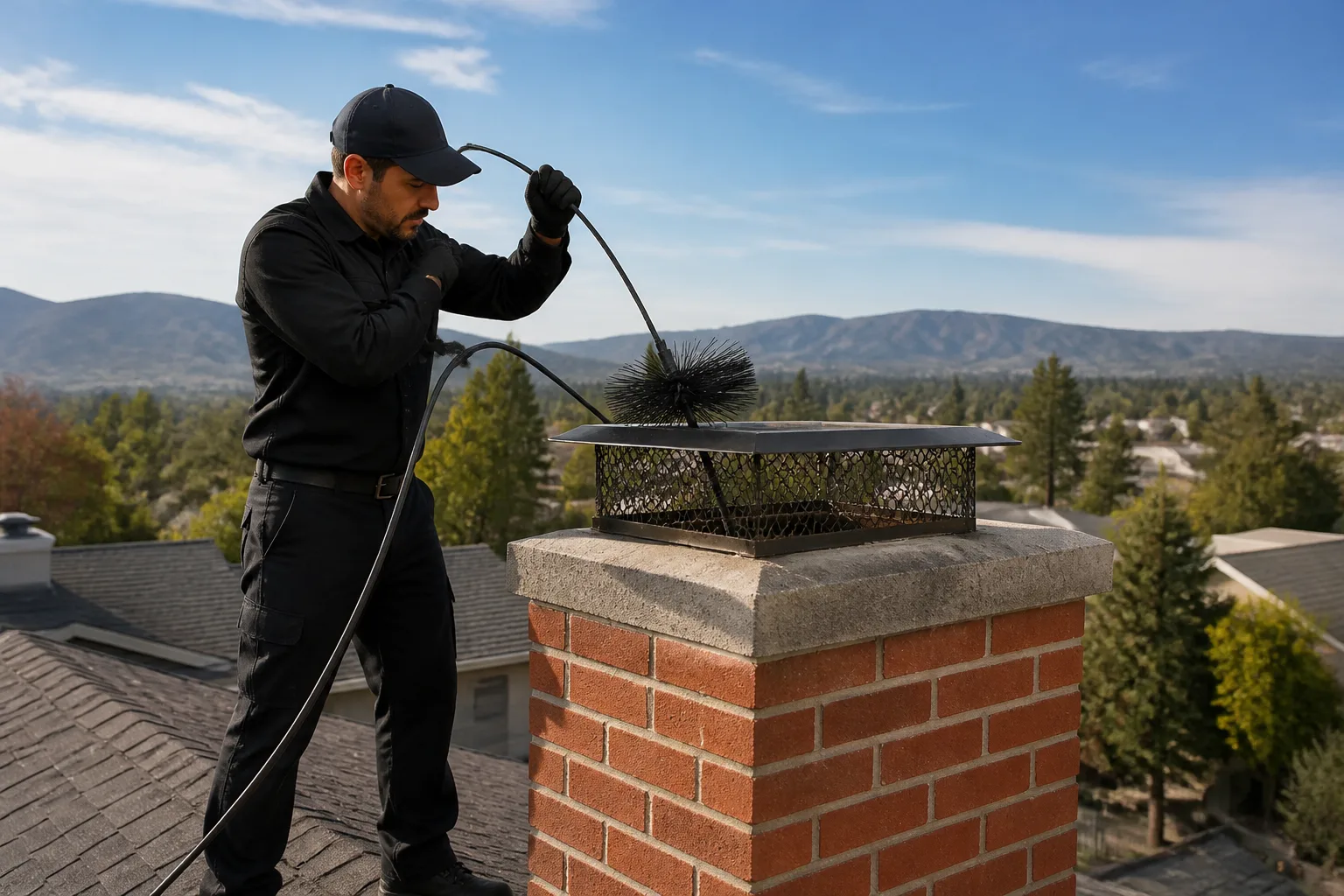
Famco Chimney Sweep in Northridge: A Homeowner’s Guide
Famco doesn’t make chimney brushes or sweeping equipment. They manufacture the metal components attached to your chimney system: vent caps, draft hoods, registers, and termination fittings. If your Northridge home has a Famco cap on the flue or a Famco draft hood above the water heater, this guide explains what those parts do, how to identify them, and what maintenance actually matters in the San Fernando Valley climate. And if you’d rather not get on the roof yourself, call us at (833) 589-9223 and we’ll handle the inspection during a standard sweep.
What Famco Actually Manufactures (and Why It Shows Up in Northridge Homes)
Famco is a metal fabrication company, not a chimney service brand. They produce sheet-metal ventilation components: roof vent caps, draft hoods, wall registers, roof flashings, and termination collars. Builders and HVAC contractors specify Famco because their galvanized and stainless components hold dimensional tolerance. A 6-inch Famco cap fits a 6-inch flue pipe with consistent clearance, which affects draft performance more than most homeowners realize.
In Northridge residential construction from the 1970s through the early 2000s, Famco draft hoods on gas water heaters are common. We find them on the majority of older gas appliances we inspect in neighborhoods like Sherwood Forest and Devonshire Highlands. The product categories we see most in Northridge homes:
- Draft hoods on gas water heaters and older furnaces
- Roof vent caps on masonry chimneys serving gas or wood-burning fireplaces
- Wall registers on sidewall-vented appliances (less common, but present in some 1980s builds)
- Roof flashings and storm collars where B-vent or single-wall pipe penetrates the roof line
Understanding which Famco component you have determines what maintenance looks like. A draft hood on a water heater has different failure modes than a vent cap exposed to San Fernando Valley sun. If you’re not sure what’s on your roof, a chimney sweep in Northridge can identify components during a standard cleaning visit.
How to Identify Your Existing Famco Component (and Why the Stamped Markings Matter)
Every Famco product carries a stamped identifier, usually on the collar, flange, or inside the cap body. You’ll see a model number like “FCR-6” or “DVH-4” followed by a diameter measurement. These markings tell you the exact throat diameter, material spec, and sometimes the manufacturing year. That information matters when something fails.
Here’s the thing about replacement parts: a 6-inch cap isn’t just a 6-inch cap. The throat dimension, the screen mesh density, the internal baffle design, and the galvanization weight all affect how that cap performs on your specific flue. When a vent cap fails on a Famco-fitted system, replacing it with a generic big-box alternative isn’t neutral. Mismatched throat dimensions can reduce draft efficiency by 15 to 20 percent and void any installer warranty still in effect.
What to look for when identifying your component:
- Remove the cap or draft hood and check the underside for stamped markings (letters and numbers, not a printed label)
- Measure the outside diameter of the flue pipe, not the inside
- Note whether the metal is galvanized steel or stainless (galvanized has a duller gray finish; stainless has a slightly warmer tone)
- Check for a manufacturing date stamp, typically two digits
We pulled a cap off a house near Dearborn Park last month where the homeowner had assumed it was an off-brand part. It was a Famco FCR-6 from 1998, with the original screen intact but the side-wall galvanization worn through. That’s a replacement call, not a repair call, and knowing the model let us source the exact spec-matched part instead of measuring and hoping.
Maintenance Schedule for Famco Vent Caps in the San Fernando Valley
Northridge’s climate is rough on exterior metal. We get 280-plus days of sun, UV exposure that breaks down galvanized coatings, and Santa Ana wind events that blow fine dust and debris into any opening. Low humidity means less rust from moisture, but the UV-to-galvanization breakdown is the primary wear mechanism here.
For a Famco vent cap on a wood-burning or gas fireplace serving an active chimney, we recommend:
- Every 12 months: Visual inspection from the roof or with binoculars. Look for rust staining, bent vanes, missing screen mesh, or debris accumulation around the collar.
- Every 24 to 36 months: Remove the cap and inspect the underside for corrosion and screen integrity. Clean the screen mesh with a stiff brush if clogged.
- Every 10 to 15 years: Plan for replacement, even if the cap looks functional from the ground. Galvanized coating failure accelerates once it starts, and a rusted-through cap introduces water and debris into the flue.
- After major wind events: Check for loosened mounting brackets or displaced sections. Santa Ana season in Northridge regularly produces gusts strong enough to shift improperly secured caps.
The maintenance interval shortens if your chimney serves a gas appliance that runs year-round. Constant heat cycling plus UV exposure doubles the wear rate relative to a wood-burning fireplace used only four months of the year. If you’re uncertain about the condition of an existing cap, we inspect every chimney component as part of a standard sweep, not just the flue interior.
Why Spec-Grade Products Require Spec-Grade Installation
Dimensional tolerance sounds like engineering jargon, but it directly affects how your chimney drafts. Famco components are manufactured to tighter tolerances than generic alternatives. The throat opening, the screen mesh spacing, the baffle angle: these are consistent across production runs. That consistency is why contractors specify Famco and Copperfield over off-brand fittings from the hardware aisle.
But tolerances only matter if the installation respects them. A sloppy install on a quality cap negates most of the performance benefit:
- Incorrect throat sizing creates turbulence at the flue exit, reducing draft and pushing smoke back into the house
- Over-tightened mounting brackets can deform the cap body, changing the airflow path
- Improper sealant application around the collar lets water creep between the cap and flue, accelerating freeze-thaw wear in clay tile liners
- Using the wrong screen mesh for a wood-burning flue leads to clogging, which is the number one cause of reduced draft we find in Northridge chimneys
This is why we install the same brands we trust for repair work. DuraFlex for liners, HeatShield for flue restoration, Famco and Copperfield for caps and terminals. The parts are the same ones a commercial contractor would specify, and the installation respects the dimensional requirements the manufacturer set. When your chimney already has Famco components, matching the replacement part to the existing system is straightforward. When it has a generic part, we can usually upgrade to spec-grade without modifying the flue.
Repair vs. Replacement: Reading Galvanization Wear on Famco Components
Not every worn Famco component needs replacement. The decision comes down to where the wear is and how the part functions. Galvanized steel sacrifices its zinc coating over time, and that sacrifice is what protects the underlying steel. Once the zinc is gone in a critical area, the steel degrades quickly, but before that point, repair or continued use may be perfectly reasonable.
What we look for when assessing a Famco cap or draft hood in Northridge:
- Surface staining on the exterior: Cosmetic only. Rust-colored staining without flaking metal doesn’t compromise function. Leave it.
- Worn galvanization on the side walls: Repair territory if the wear is confined to a small area. A quality high-temp primer and paint can extend life by three to five years.
- Flaking or holes through the metal body: Replacement. Once the structural steel is compromised, the part no longer holds shape under wind load and can separate from the flue.
- Worn galvanization on the throat or collar: Replacement. This is the sealing surface, and corrosion here means water entry into the flue system.
- Screen mesh with multiple broken welds: Replacement. A compromised screen allows embers to escape, which is a fire hazard on any wood-burning chimney in the Valley’s dry conditions.
We had a homeowner in Granada Hills adjacent to Northridge call us about a rusty cap, convinced he needed a new one. The exterior had surface staining, but the throat was intact and the screen mesh was solid. We cleaned it, touched up the side wall galvanization, and it’s still in service three years later. The honest call saved him $200. That’s the kind of work we do on our chimney repair in Northridge jobs: fix what’s fixable, replace what isn’t, and explain the reasoning either way.
How Famco Parts Work With Other Spec-Grade Components
Famco doesn’t make chimney liners or ceramic flue tiles. Their products are designed to work with whatever system the contractor specified: clay tile, stainless liner, or B-vent pipe. The connection point is the critical interface, and that’s where compatibility matters.
When we install a Famco cap on a chimney that’s been relined with DuraFlex, the cap doesn’t just sit on top. It has to match the liner’s diameter, create a proper seal against the crown, and leave the correct annulus space for expansion during high-heat fires. A cap sized for one diameter but installed on another creates turbulence that reduces draft even if it looks right from the street.
The same logic applies to draft hoods on gas appliances. Famco draft hoods are matched to the appliance’s Btu output and the vent pipe diameter. Mismatched draft hoods cause flame roll-out at the burner, which shows up as soot marks around the water heater access panel. We find this regularly in Northridge homes where a previous homeowner or handyman replaced a water heater and reused the old draft hood because it “looked close enough.”
If your chimney has mixed-brand components and you’re experiencing draft problems, Chimney Sweep Northridge can assess the full system, identify where the mismatch is, and spec a correct replacement from our vetted brand lineup. We explain what we find, show you why it matters, and fix it with materials built to last.
The Bottom Line
Famco products are specified by contractors for dimensional accuracy and material consistency. If your Northridge home has Famco vent caps, draft hoods, or registers, the right maintenance approach depends on identifying the model, understanding how San Fernando Valley conditions wear galvanized metal, and knowing when a repair extends life versus when replacement is the only safe call. Matching a replacement part to the existing system matters more than most people realize, and a mismatched cap can reduce draft by 15 to 20 percent.
If you’re in Northridge and need help identifying or servicing Famco components on your chimney, we’re happy to take a look. Estimates are free, and we’ll show you exactly what’s on your roof and what it needs. Call (833) 589-9223 to schedule.
Frequently Asked Questions
No. Famco manufactures sheet-metal ventilation components including vent caps, draft hoods, registers, and flashings. Chimney sweeping is performed with brushes and vacuum systems, not Famco products. If you need your flue cleaned, Chimney Sweep in Northridge handles the full sweep and will identify any Famco components attached to your system during the visit.
Remove the cap and look for stamped markings on the underside, collar, or flange. Famco stamps model numbers like “FCR” or “DVH” followed by a diameter. The metal will be galvanized or stainless steel. If you can’t safely access the roof, we identify caps and all other chimney components during a standard inspection. Call (833) 589-9223 to book.
Plan for replacement every 10 to 15 years in the San Fernando Valley. High UV exposure degrades galvanized coating faster than coastal climates, and once the zinc layer fails, the underlying steel deteriorates quickly. Some caps last longer if stainless steel or if the chimney serves a rarely-used fireplace, but the 10-year mark is when we start watching closely.
You can, but you shouldn’t. Throat dimensions, screen mesh density, and baffle design differ between manufacturers even at the same nominal diameter. A mismatch can reduce draft efficiency by 15 to 20 percent and may void an installer warranty. Spec-matched replacement using Famco or Copperfield parts preserves the system’s designed performance. We also provide dryer vent cleaning in Northridge as a related fire-safety service, addressing another leading cause of residential structure fires in the Valley.
Written by the team at Chimney Sweep Northridge, serving Northridge since 2012.
Need Chimney Cleaning Help?
Call Chimney Sweep Northridge - licensed & insured, here with fast help in Northridge.
(833) 589-9223